So I wanted to go Red Sea SCUBA diving, after much research, I booked a flight, and here we go.
So my Trips starts in Cairo
Upon landing in Cairo, I went through three checkpoints and metal detectors. After that, I found myself sitting alone in the exit terminal until about six guys sat around and started talking. Initially, I thought nothing of it, but then I noticed that they all had little badges on their suits.
I withdrew some Egyptian Pounds from the ATM, and I was glad to see that there were no fees or charges. As I sat back down, I noticed that all of them were carrying sidearms and SMGs, which made me feel safe. It was only later that I found out that they were the Tourism Police, who are present all over the city.

To the Hotel
I called my hotel, La Passage, for the shuttle and went to my room. I had confirmed my private tour for the next day at 8 am. I had booked it a week before for $100, which included a private driver and tour guide to show me the sights – totally worth it.
I had dinner at one of the many restaurants at the hotel, and while the buffet was pretty good, I found the food to be okay, but lacking in real flavor. I like lots of seasoning, but there wasn’t much here. Then, off to bed where, after a long flight and lack of sleep, I crashed SUPER hard. It was the best sleep ever!
I woke up at 6:30 am and prepped for the day. I made my way down to breakfast, and although they had waffles, they didn’t have any syrup. So, I mixed up some of everything and tried it. It wasn’t bad. At 8 am, I made my way outside to wait for my driver. My guide told me he was at the gate waiting. The hotel is gated and very cautious about who they let in.
So, I made my way down, and the driver started driving us to the Pyramids to meet the guide. This was my first time out of the US, and it wasn’t as weird as I had expected, but I was taken aback by it. The city was almost rubble in most places, but beautiful at the same time. I, in no way, wanted to drive here. A good Egyptian driver could probably drive blindfolded, guided only by the sounds of honking. It’s like they’ve developed another sense!
OMG A LIFE GOAL COMPLETE
We made it up to the Pyramids to meet the guide, who then walked me through the plan. He asked if I wanted to go inside one of them, and said he would have to get another ticket for that. Of course, I said yes. He talked about the history of the pyramids, and we walked around to see them. It had always been a dream of mine to see them, and now I was at the base staring up at them, thinking.
I had thought they would be bigger, but they were massive and not far off from what I had imagined. Seeing the location and layout was awesome, something I had only ever seen in books or on TV; I never really grasped the layout.
Going down into the Great Pyramid was awesome but it was a tight fit. I hope to see more next time I visit. We then went over to the camels down the road for a camel ride, and I noticed the guide slipping money to everyone he came up to. I loved it. So, I got my camel ride, not my first time on a camel but riding a camel at the pyramids, you can’t miss that.
Can I take a AK home?
After visiting the Sphinx, we headed to a papyrus shop where I saw how they make this ancient paper and had the chance to purchase some. The process was interesting and I ended up buying a small piece as a souvenir.
Then, we went to an oil shop where I saw a glass bottle maker at work and learned about the various oils they sell. The saleswoman even mentioned that they could replicate popular scents. I ended up purchasing a small jar of oil, and the building with the bottles reminded me of a brothel.
Come on I need a bigger drink LOL
Lunchtime arrived, and we stopped at a local restaurant for a dish of chicken and beef kebabs, which tasted pretty good. When I ordered a coke, I was surprised by the small size – only 8oz. Being a fat American, I was used to a size of at least 16oz, and I joked that I wanted a 32oz instead. At this point, all I wanted was a pizza and a Dr Pepper.
Once we got into the Egyptian Museum, it was amazing. Once again, my guide passed money from hand-to-hand, and he led me all over the museum, telling me history and going through his script. However, I kept telling him that I wanted to look, as he was skipping so much. To be honest, I was not really listening to a damn thing, as most of it I already knew and the rest I would forget anyway.
I loved the feel of the museum – everything was just laid out and all over. They had so much stuff that they packed it in. I could touch stuff, go from room to room, and just keep going. I could have spent a couple of days there just looking around. The best part was the Tut exhibit, which was still there, and no photos were allowed inside the exhibit. But seeing it was so great, I was super excited. I stopped by the gift shop and got some trinkets, and then we moved on to the Bazaar.
We walked down to see Islamic Cairo, old mosques, and the Bazaar. Walking down the bazaar was great, and the guide told me to tell him what I wanted, and he would get it for me. I loved the kickbacks that he got every time I bought something. Every time I would buy something, he would run back after and say he was looking at something, just getting his cut. However, for most of the things I bought, I got fair or good prices.
Cool Structures
As we walked, he would talk about the different buildings and their history, showing me the differences between Egyptian, Roman, and other architectural styles. We saw some truly beautiful sites. When we finished up, it was time to head back to the hotel. The drive back, about 40 minutes, offered an awesome view of the town and the Nile.
When they dropped me off, I tipped more than the tour cost me, but it was worth it. It was stress-free and allowed me to see a lot in a short amount of time. I would highly recommend it, but next time I may just hire a private driver so I won’t waste any more time than I want to.
Back at the hotel, I realized that I needed a bag to carry my stuff. I had managed to have only carry-on bags for the trip, but now I needed a checked bag. Luckily, the hotel had little shops all over, and I found a nice bag to carry my things. I had a morning flight to Marsa Alam to catch.
Red Sea SCUBA Diving – Dive Resort
After getting a decent night’s sleep, I made my way over to breakfast before heading to the dive shop. My biggest complaint about eating here is breakfast. I haven’t had any maple syrup since I got here. I had waffles at the hotel in Cairo but no syrup, and at the resort, there’s nothing, not even a waffle. LOL. But overall, the food is good, and I drink lots of tea anyway.
The orientation meeting was supposed to start at 9 am, but it didn’t start until around 9:30 am. We walked through all the dive site extras to buy, then talked about the house reef and the zones to dive in and how. Then we made our way to the dive shop, and the instructor showed the protocol for everything. The language barrier is a little hard for me at times, but I made do. This location is an open diving center, so once you do the two orientation dives, you can dive freely without a guide. This is where having a dive buddy to travel with is great.
 travaddic
It seems like you had an eventful day diving in windy conditions. Your first dive may have been a bit disorganized, but you still managed to see a turtle, lionfish, and dolphins, which is quite an experience! It’s good that you were able to warm up after the initial cold and enjoy the dive.
The second dive sounded much better, with clearer water and a better dive plan. It’s always important to be mindful of your air consumption and ascend with enough air in your tank, so it’s great that you were at 700psi when you ascended. And yes, getting towed back to shore on the rib is much easier than having to climb back in!
It sounds like you also enjoyed a delicious lunch with beefsteak, grilled chicken, potatoes, green beans, and olives, and a refreshing cup of mint tea. And despite missing maple syrup for your waffles, you’re finding the food to be good overall.
Day 2
Will the darn wind go away? I made it to breakfast, and the wind is getting stronger and stronger. A wind storm is coming in, so diving may be off today. I’m just sitting here in my swimming shorts by my room door, enjoying the sun and watching the wind and sand fly by. It’s actually pretty cool to watch, and the sun is very reenergizing after being so cold lately.
I’m missing my room in Cairo. But watching the storm go by is fun. I have to work on lots of computers for soldiers deployed overseas. I understand now why they have computers full of sand and dust. My poor Dell is covered in sand. I’m gonna have to give it a good cleaning when I get back.
 travaddic
Day 3
So there I was, sitting on the beach in Egypt, overlooking the Red Sea, smoking a hookah…
Diving was canceled again due to the weather, so I spent the day trying to keep myself occupied. I walked around, ate some food, and took plenty of pictures. The weather was cold and windy in the morning, so I bundled up and watched the sunrise before heading to breakfast. Later on, I spent the day on the beach whenever the sun peeked through the clouds. I took some random photos of the surroundings as well. Despite the disappointment of not being able to dive, it was still nice to relax and enjoy the scenery.
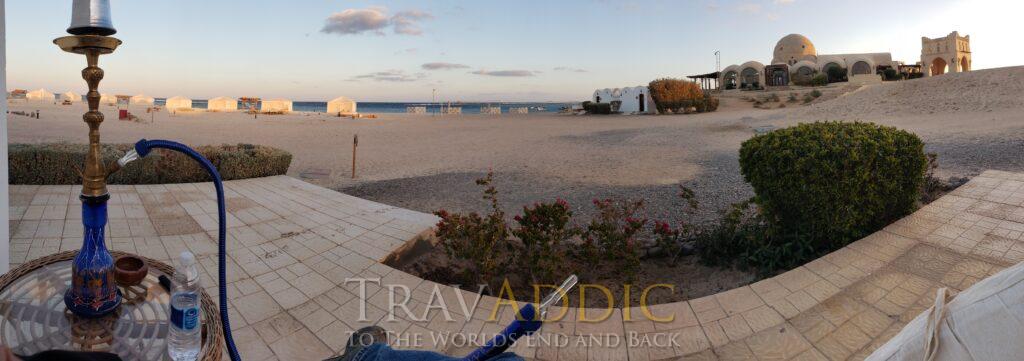
I broke out the hookah or shisha pipe to give it a go and sat on the beach, smoking it. It was rather relaxing. I had a nice mint shisha from the local shop. We just sat around listening to music until dinnertime. For years, I smoked a hookah back home but sold it a few years back with regret. It was nice to be able to pack a bowl again and sit back, relax, and enjoy.

I’m keeping my fingers crossed for tomorrow, but the weather is supposed to be much better. This cold and windy weather is rough, especially in a room with no heater. I’m thankful for the two beds and the extra blanket which is a godsend.
I took the time to reorganize my room and clean up a bit. Being stuck in a room with no TV or decent internet is tough for a tech guy like me. I was talking to my dive buddy and we agreed that this is why you need a partner with you, so if you’re stuck in your room, you can fill the time together.
Day 4 Red Sea SCUBA Diving last day
So, on day 4, the weather was AMAZING and diving started early. I geared up and got in; two divers who were coming out were the first in and said it was so clear, luckily my buddy and I were second. It started cold, but once we hit about 5 ft of water, it warmed up. The water was a dream, and it was a great first dive. The only problem was my GoPro died and would not take a charge, so I had to get photos from my buddy. This gave me more time just to look and not worry about a camera, so it worked out, LOL.
We did 5 shore dives, which was nice, just coming out, grabbing a coke, sitting for a few, then swapping tanks and heading out again. We did 3 dives in the morning and 2 after lunch, with the maximum depth of 105ft on dive 2, but 80ft to 40ft on the others, so easy peasy, LOL.

After my dives, I went to the front office to check out and take a COVID test. Honestly, I don’t think it was a real COVID test, as the person had it all printed out and ready when I got to the office. But I did get to see the decompression chamber, which was cool. They have one on site, so it’s nice to know that if you screw up, maybe they can save you. LOL.

I wanted to get another dive in but I was flying the next day so left 18hrs open before flight, I got the car scheduled for the 3 hour trip to the airport, and checked out of my room since I was leaving at 630am the next morning.

Swimming with the turtle and the schools of fish are some of the best parts of the trip, learned a lot about traveling outside the US to better help me next time….. 2 months.

I will defiantly be coming back, only closer to summertime, and spend a couple of days in Cairo, a lot I want to see around town.
Flying Back
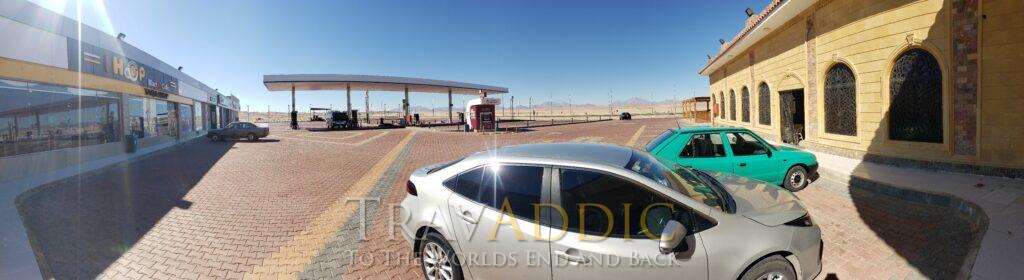
So it was time to leave Marsa Shagra Village. At 6 am, I started getting my bags together and checked the room one last time to make sure I didn’t leave anything behind. I then headed up to wait for my ride at 6:30 am. Unfortunately, the driver didn’t speak any English, and I didn’t know any Arabic, so it was a silent trip. However, the three-hour drive was filled with beautiful scenery, with the Red Sea on my right and the desert on my left, which was an amazing sight. About 30 minutes from the airport, the driver stopped for gas, and I went inside to see what they had. There wasn’t much, so I grabbed a Coke and a water for 20 EGP or $1.27. I realized I needed to get out of the tourist zone more often to save some money.
When I arrived at the Hurghada airport for check-in, it was a constant request for my passport every 10 feet, but despite the language barrier, the staff was very helpful. I also enjoyed seeing all the AK variants and HK MP5s throughout the airport, totally fanboying it up. LOL.

So, it took 4 hours to get to Switzerland. Let me start by saying that Zurich airport is not very efficient. They gave me a 50-minute layover, and I had never been there before. When I got off the plane, the boarding for my next flight was already in progress, and my gate was not listed on my ticket, and my plane was not on the board.
I looked around, but there was no one there to help me. I had to wait in line to go through security, and I asked the security person for help, but he ran off as my bags were getting checked, and I had only 20 minutes left. I was freaking out, but thankfully he came back and told me my gate was upstairs.
I got my health stamp and boarded the plane while on the phone with my girlfriend, who was helping me stay calm. Finally, I was on my way back to the US.

So, I settled into my plane seat – a window seat on the port side all the way to the stern – and instructed the lady next to me to nudge me if I got annoying, since I’m deaf on the right side and may not hear her. I find that using this as an ice breaker works well. She was nice and easy-going.
As we took off, I started a movie and they served us drinks and dinner before I finished it. As I started a second movie, I fell asleep. I woke up 7 hours later to the announcement that we were getting ready to land – sweet, I had slept the rest of the way.
Back in the US, we landed in Newark. I picked up my baggage and pushed into my gate to wait for my flight to MCI (Kansas City), so I had 14 hours to kill – 10 hours as I type this.
Red Sea Scuba Diving: A Guide to the Best Dive Sites and Marine Life
The Red Sea is widely recognized as one of the best scuba diving destinations in the world. It is home to a wide variety of marine life, including hammerhead sharks, manta rays, thresher sharks, and whale sharks. The Red Sea also boasts some of the best wreck dives in the world, such as the SS Thistlegorm. With its warm waters and excellent diving conditions, it is no surprise that scuba divers from all over the world flock to the Red Sea to experience its beauty.
In this article, we will provide you with a comprehensive guide to scuba diving the Red Sea. We will cover the best dive sites, the marine life you can expect to see, the best time to visit, and much more.
Best Dive Sites in the Red Sea
Sharm El Sheikh: Sharm El Sheikh is located on the southern tip of the Sinai Peninsula and is one of the most popular dive destinations in the Red Sea. It offers a wide range of dive sites, from shallow reefs to deeper wrecks. One of the most famous dive sites in Sharm El Sheikh is Ras Mohammed National Park, which is home to an abundance of marine life, including grey reef sharks and manta rays.
Marsa Alam: Marsa Alam is located in the southern area of the Red Sea and is known for its pristine reefs and excellent diving conditions. The deep south is one of the best areas to dive in Marsa Alam, with sites such as Elphinstone Reef and St. John’s offering wall dives and the opportunity to see hammerhead sharks.
Port Ghalib: Port Ghalib is a resort town located on the western shore of the Red Sea and is a great starting point for diving day trips. The Fury Shoals are a popular dive site near Port Ghalib, offering the chance to see hammerhead sharks and oceanic whitetips.
El Gouna: El Gouna is a small fishing village located on the western shore of the Red Sea. It offers a more relaxed diving experience than some of the larger resort towns and is known for its healthy coral reefs.
Best Time to Visit the Red Sea for Scuba Diving
The best time to visit the Red Sea for scuba diving is between March and May and between September and November. During these months, the water temperatures are warm, and the visibility is excellent. The winter months can also be a good time to visit, but the water temperatures are cooler, and there is a higher chance of strong currents.
Marine Life in the Red Sea
The Red Sea is home to a vast array of marine life, including over 1,000 species of fish. The Brothers Islands, located in the northern Red Sea, are one of the best places to see hammerhead sharks. Ras Mohammed National Park is also a great place to see a variety of marine life, including moray eels, grey reef sharks, and manta rays.
The northern Red Sea is also home to the SS Thistlegorm, one of the best wreck dives in the world. The wreck is home to schools of fish and offers close encounters with barracudas and other species of fish.
Liveaboard Trips in the Red Sea
One of the best ways to experience the Red Sea is on a liveaboard trip. Liveaboards allow you to dive in some of the best dive sites in the Red Sea, including the Brothers Islands and Daedalus Reef. They also offer the opportunity to see whale sharks, thresher sharks, and oceanic whitetips.
Dive Operators in the Red Sea
There are many dive operators in the Red Sea, offering day trips and liveaboard trips. Some of The Northern Red Sea
The Northern Red Sea region, located in Egypt, is a world-renowned destination for scuba diving enthusiasts. It is the most popular area for diving in Egypt and the Red Sea, with a wide range of dive sites that cater to all levels of scuba divers. Some of the best dive sites in the Northern Red Sea include the Straits of Tiran, Ras Mohammed National Park, and the Brothers Islands.
The Straits of Tiran is a collection of four reefs, each offering its own unique diving experience. Jackson Reef is the most popular, with steep drop-offs and strong currents that bring in pelagic species such as barracuda, jacks, and even hammerhead sharks. The Straits of Tiran is also home to impressive coral formations and an abundance of marine life, including turtles, moray eels, and various species of reef fish.
Ras Mohammed National Park is another must-visit diving destination in the Northern Red Sea. This protected area is home to some of the most pristine reefs in the world, with a variety of colorful coral formations and a wide range of fish species. Divers can expect to encounter large schools of fish, such as snappers and barracuda, as well as pelagic species like whale sharks and manta rays. Shark Reef and Yolanda Reef are two of the most famous dive sites in the park, offering close encounters with grey reef sharks and the chance to explore the remains of the Yolanda wreck.
The Brothers Islands are located further south in the Northern Red Sea and offer some of the best diving in the region. The two islands, Big Brother and Little Brother, are known for their healthy coral reefs, diverse marine life, and the chance to encounter large pelagic species. The Brother Islands are also home to some of the most famous dive sites in the region, including the wrecks of the Numidia and Aida, as well as the famous reef wall at Little Brother Island.
The Southern Red Sea
The Southern Red Sea region, also located in Egypt, is a remote and less visited area that offers some of the best diving in the world. This region is known for its deep dive sites, strong currents, and the chance to encounter large pelagic species such as hammerhead sharks and oceanic whitetip sharks.
Some of the best dive sites in the Southern Red Sea include Elphinstone Reef, St. John’s, and Daedalus Reef. Elphinstone Reef is a deep dive site that is known for its strong currents and the chance to encounter oceanic whitetip sharks. St. John’s is a collection of reefs that are home to some of the most colorful and pristine coral formations in the Red Sea. Daedalus Reef is a remote reef that offers the chance to encounter large pelagic species, such as hammerhead sharks and thresher sharks.
Liveaboard trips are the best way to explore the Southern Red Sea, as it is a remote area that requires long boat journeys to reach. Liveaboard trips offer the chance to visit multiple dive sites in the region and explore some of the most pristine and untouched areas of the Red Sea.
Conclusion
Scuba diving the Red Sea is an experience that every scuba diving enthusiast should have. With its warm water temperatures, diverse marine life, and excellent diving conditions, the Red Sea is a top diving destination that offers something for everyone. Whether you are an experienced diver looking for a challenging dive or a beginner looking to explore the shallow reefs, the Red Sea has it all. So pack your bags and head to Egypt to explore the beauty of the Red Sea for yourself.
Contact me if you have any questions on our contact page
Navigating through life, or as I like to call it, stumbling through a travel brochure, I’ve bounced from one continent to another like a ping pong ball. From riding a camel around the pyramids and getting lost in Cairo’s bazaars, to scuba diving wrecks off Florida, mingling with sharks in Roatan, and admiring Cozumel’s coral reefs. And amidst this whirlwind of adventure, I find time to scribble it all down in a blog, because what’s a near-death experience with a dolphin if you can’t brag about it online, right? So here’s to cheap travels, history lessons in every port, and unforgettable under-the-sea encounters. May my suitcase always be packed and my oxygen tank never be empty!
